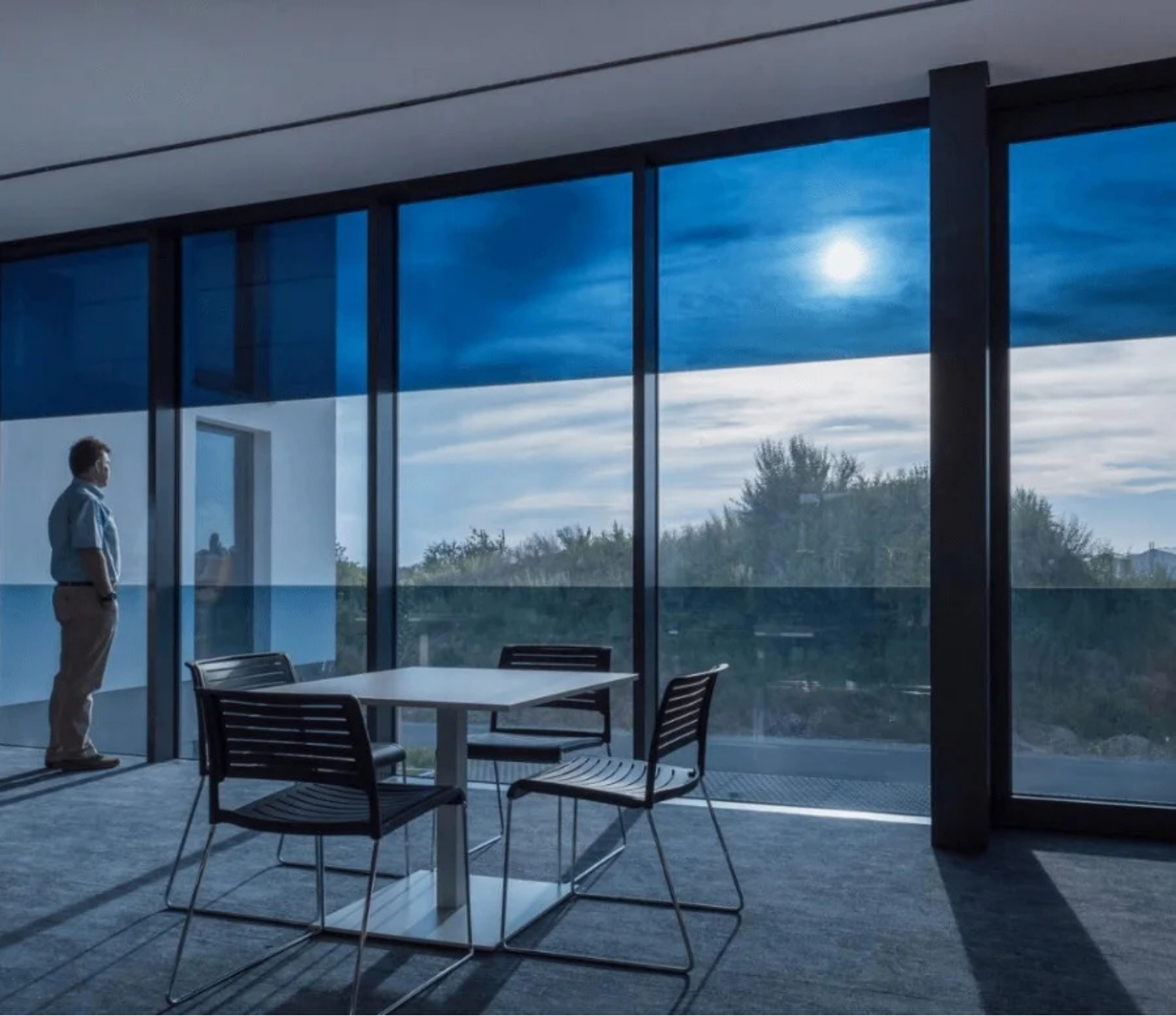
The most expensive thing in your office is not the rent, it is the human beings inside it. And most offices are making their jobs harder than they need to ...
Dynamic Smart Glass Technologies Explained: Electrochromic, SPD & Photochromic for European Projects For architects, developers, and project managers across the UK and Europe, specifying the right glazing system is one ...
Dynamic Glass for Commercial Buildings: Applications, Benefits, and What to Specify When most commercial buildings struggle to balance natural light, privacy, and energy performance—dynamic glass solves all three without adding ...
Electropolarised vs Electrochromic Glass: What’s the Difference and Which Should You Specify? In modern architecture, glass is an active system that defines privacy, performance, and user experience.’ For architects and ...
Dynamic Glass, Automated Tech for Optimal Car Comfort The future of comfortable driving is witnessing innovation in the surfaces that surround us inside a vehicle. Glass—once a static component of ...
Sustainable architecture today is defined by intelligent restraint. It is no longer about adding more systems to a building — it is about embedding performance directly into its materials. Dynamic ...
Glass, once passive- framed views, let in daylight, and created visual lightness. Today, it performs. It responds. And it communicates. From electrochromic glass that adjusts tint in real time to ...
A Refined Approach to Light, Comfort, and Control In 2026 and beyond, modern buildings are being designed around mobile materials. In today’s day and age, façades are expected to respond ...
Smart City as a Responsive Urban System Smart cities are no longer defined only by data dashboards, sensors, or connected transport. Increasingly, they are shaped by how buildings themselves behave—how ...
From Static Glazing to Intelligent Control For decades, architectural glass had a simple job: let light in, keep weather out, and stay visually neutral. Today, that expectation has changed. As ...